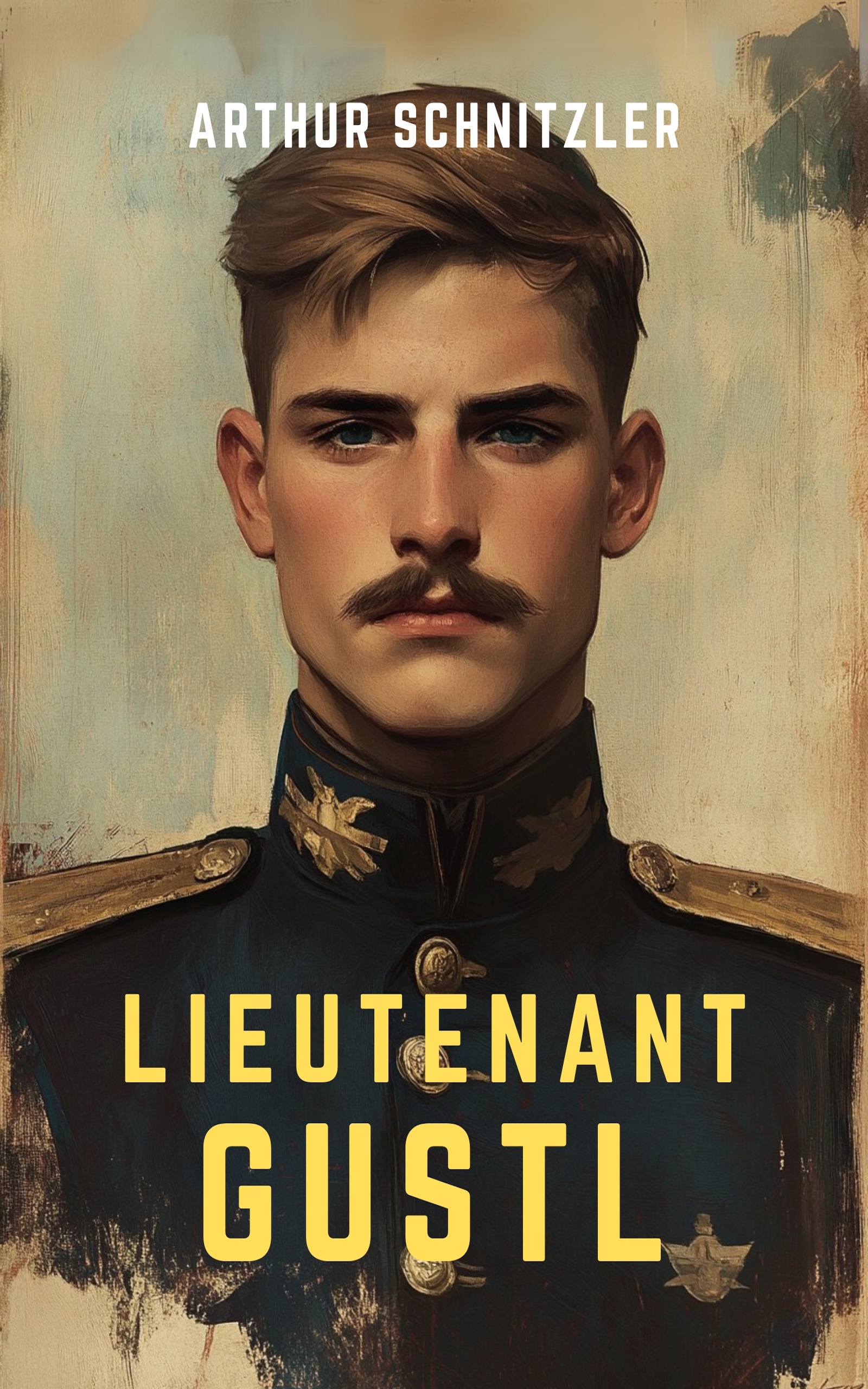
Lieutenant Gustl
·
Arthur Schnitzler
·
First Interior Monologue in German Literature
·
Vienna 1901
·
New Translation
·
Scholarly Essay & Illustrations
·
Lieutenant Gustl
·
Arthur Schnitzler
·
First Interior Monologue in German Literature
·
Vienna 1901
·
New Translation
·
Scholarly Essay & Illustrations
·
About the Book
Lieutenant Gustl
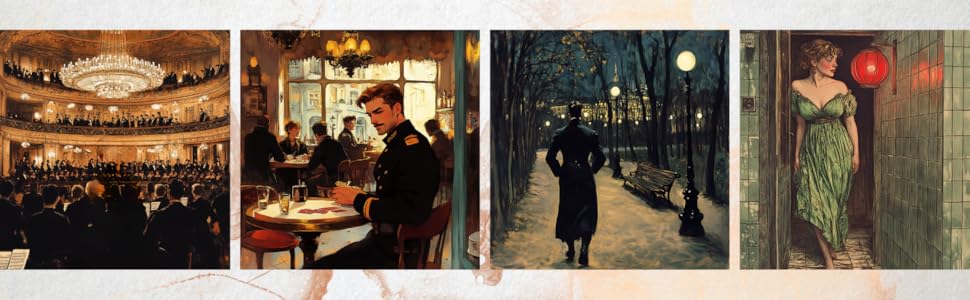
First published in 1901, Lieutenant Gustl made history as one of the first works in literature to use the interior monologue — stream of consciousness — throughout an entire narrative. Arthur Schnitzler takes us deep into the mind of Lieutenant Gustl, a young Austrian military officer, during one fateful night in Vienna.
After a heated encounter at a concert hall threatens his honour as an officer, Gustl wanders the streets of Vienna contemplating suicide to preserve his reputation. Through his unmediated internal monologue, we experience his memories, desires, prejudices, and inner turmoil as he grapples with questions of honour, duty, and identity in turn-of-the-century Austrian society.
The novella offers a scathing critique of military honour codes and antisemitism in Austrian society while pioneering psychological realism in fiction. So shocking was its portrait of an officer's inner cowardice and prejudice that Schnitzler was stripped of his commission in the Austrian Army reserve upon publication — the ultimate confirmation of its power.
The novella that invented the interior monologue — and cost Schnitzler his military rank.
Ovid Publishing Group Edition
Ovid Publishing Group Edition
What this edition includes
✦Modern translation from the original German text
✦13 beautiful illustrations of 1900s Vienna
✦Comprehensive endnotes explaining historical and cultural references
✦Detailed author biography
✦Critical essay on antisemitism in the novella
✦Historical context and editorial introduction
The Critical Essay
IAntisemitism in Arthur Schnitzler's Lieutenant Gustl: A Reflection of Early 20th-Century European Society
About the Author
Arthur Schnitzler
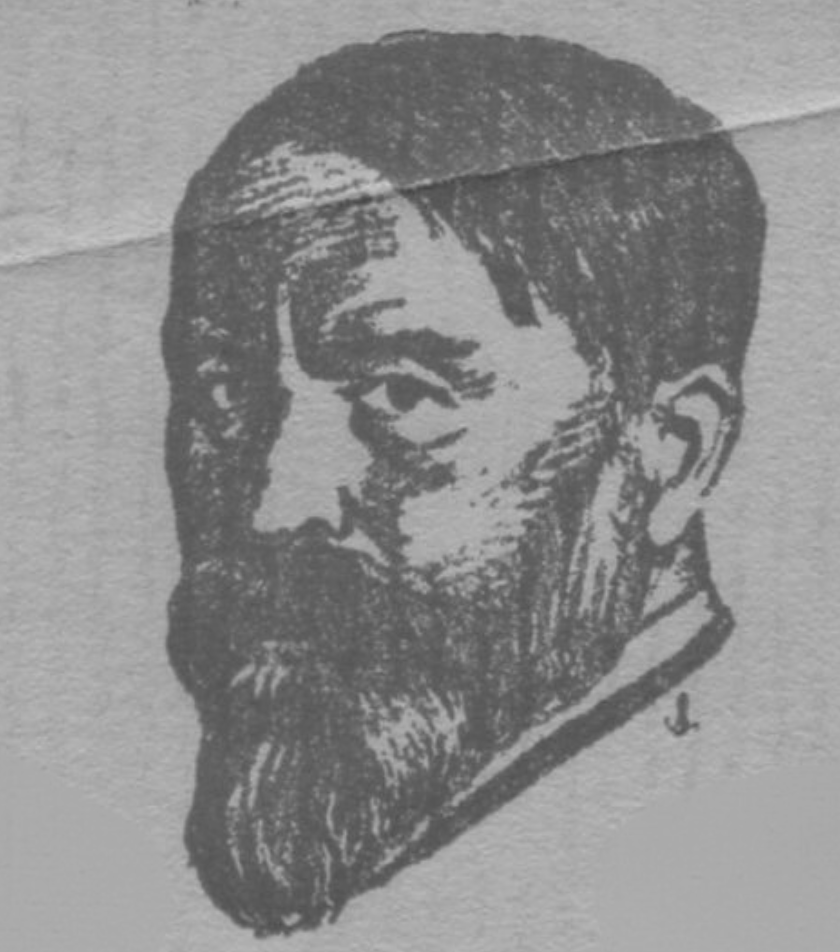
Arthur Schnitzler
Arthur Schnitzler
1862 – 1931
Arthur Schnitzler was an Austrian author and dramatist and one of the most prominent figures of the Vienna Modernism movement. Born in Vienna to a distinguished Jewish family, Schnitzler trained as a physician — a background that profoundly shaped his literary preoccupations with the inner life, desire, and moral complexity.
His works were consistently controversial for their time, offering frank depictions of sexuality, the unconscious, and the human psyche that challenged the rigid social norms of fin-de-siècle Austria. Schnitzler pioneered the use of the interior monologue in German-language literature, influencing writers across Europe and earning the deep admiration of Sigmund Freud, who called him a "colleague" in psychological insight.
His plays and novellas — including Reigen, Traumnovelle, and Leutnant Gustl — provoked censorship, riots, and official condemnation. They also secured his legacy as one of the most important European writers of the early 20th century. His works remain widely read and adapted today.